
Purpose Doesn't Come First. Success Does.
The About Us Page Nobody Reads and the Purpose Nobody Has Yet
Hi, 👋
Happy Thursday!
You’ve been told:
Start with why.
Define your mission before you build anything.
Hire for purpose alignment.
Let the mission guide every product decision.
Every accelerator repeats it. At this point questioning it feels almost reckless, like saying you don’t believe in product-market fit.
But what if the sequence is wrong?
What if purpose almost never comes first, and the companies we hold up as proof that it does are actually proof that it doesn’t? What if the honest version of this advice is the opposite: succeed first, then figure out what you stand for?
That’s not a cynical take. It’s just how it tends to play out. And mixing it up with the myth has real costs for early-stage founders who spend weeks on mission statements when they should be talking to customers.
In partnership with

Launch fast. Design beautifully. Build your startup on Framer—free for your first year.1
First impressions matter. With Framer, early-stage founders can launch a beautiful, production-ready site in hours. No dev team, no hassle. Join hundreds of YC-backed startups who launched here and never looked back.
One year free: Save $360 with a full year of Framer Pro, free for early-stage startups.
No code, no delays: Launch a polished site in hours, not weeks, without hiring developers.
Built to grow: Scale your site from MVP to full product with CMS, analytics, and AI localization.
Join YC-backed founders: Hundreds of top startups are already building on Framer.
If you’re interested in sponsoring this newsletter, please reach out here.
The Founding Myth
Stewart Butterfield did not set out to transform how teams communicate. He set out to build a video game.
Specifically, a massively multiplayer online game called Glitch, built by his company Tiny Speck starting in 2009. Glitch was surrealist, nonviolent, and beloved by a small loyal following. It was also failing. It launched in 2011, bled users, and by late 2012 was on life support. Butterfield called his investor Ben Horowitz with $6 million left in the bank and three options: pray the game turned around, shut down and return the money, or productize the internal messaging tool his engineering team had built to coordinate across three time zones.
He chose the messaging tool.
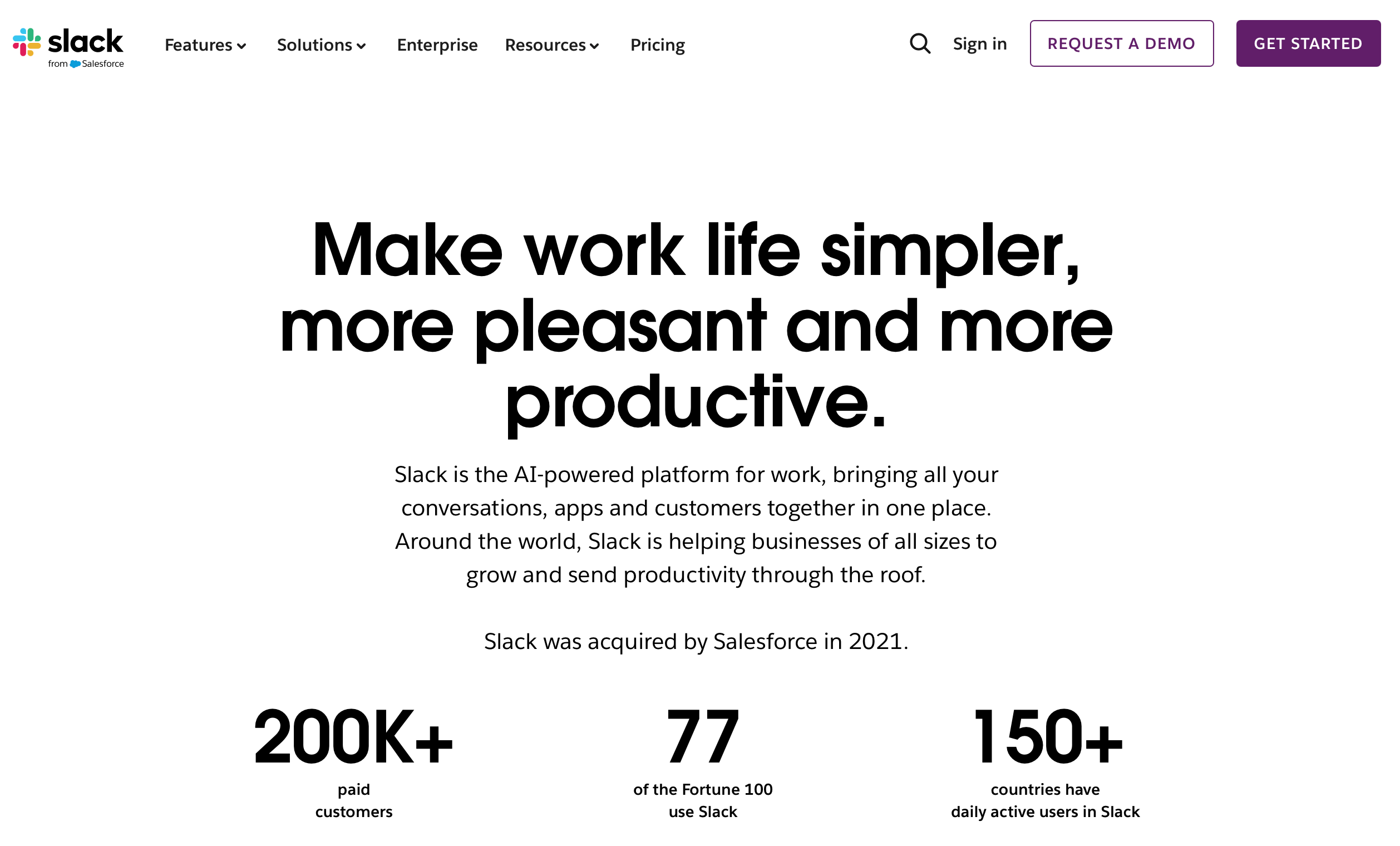
That tool became Slack. It hit a $1B valuation in eight months without spending a dollar on traditional advertising, became the fastest growing enterprise software company in history, and sold to Salesforce for $27.7B in 2021.
The purpose, making work simpler and more pleasant and more productive, came years after launch. Not before. Butterfield spent three and a half years building a failing game before he accidentally built the thing that mattered. As he later put it, his team had been their own market-of-one. They were the first and most obsessive users of the thing they’d eventually sell to the world. The purpose was in the product the whole time. They just didn’t know it until the game collapsed and the tool was the only thing left standing.
Shopify is the same story, just with snowboards instead of video games.
Tobi Lutke moved from Germany to Ottawa in 2002. He couldn’t get a work permit, so he started an online snowboard store called Snowdevil with his co-founder Scott Lake. The ecommerce software available in 2004 was, in his words, terrible. So he spent two months building his own using Ruby on Rails. The snowboard store did fine. But other merchants kept asking to license the software. Lutke and Lake looked at what they had and made the call: the software was the business, not the snowboards.
Shopify launched in 2006. It now serves over 4 million merchants and is the most valuable company in Canada.
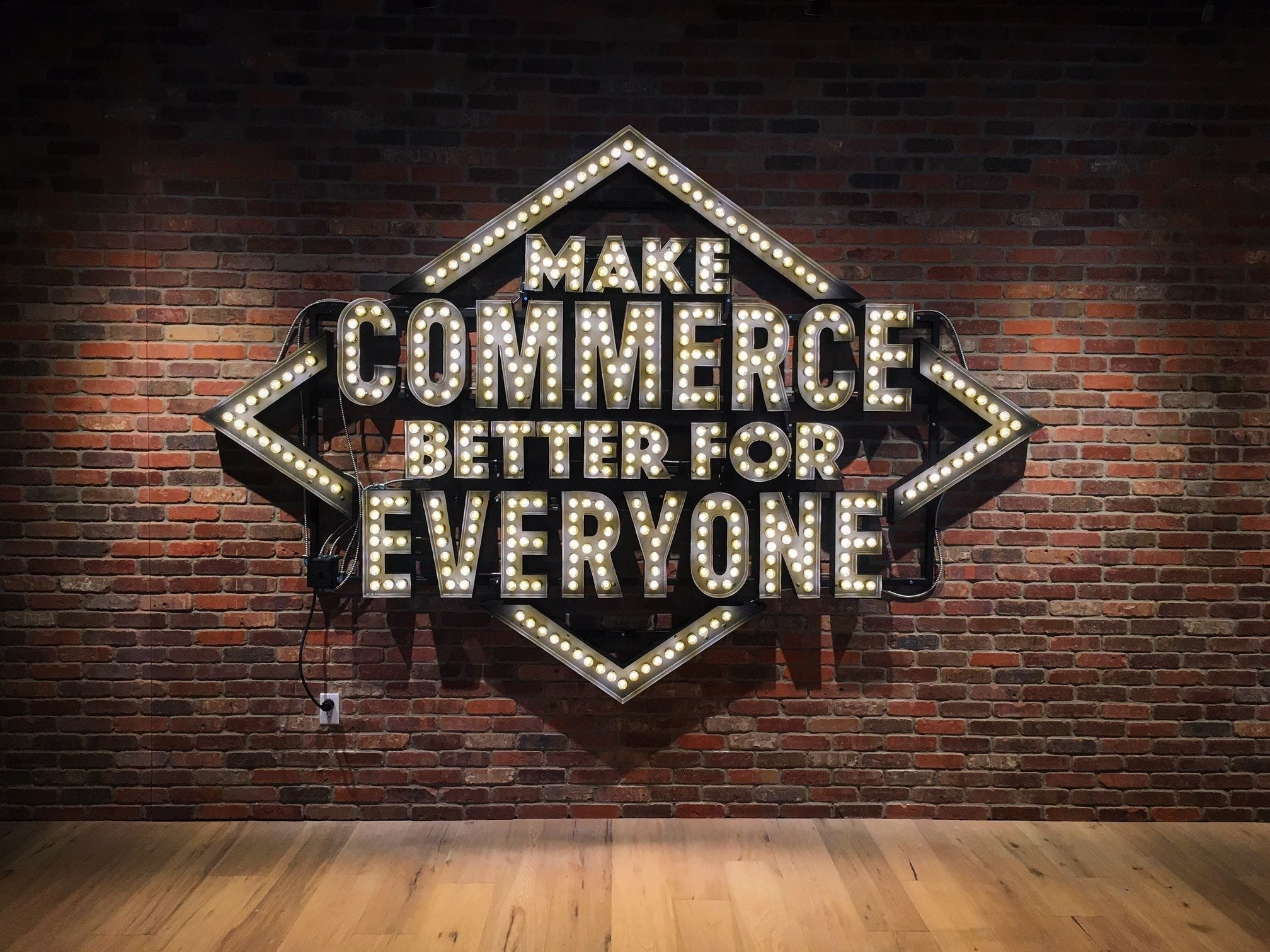
The “make commerce better for everyone” purpose, the mission to arm independent businesses against Amazon, that came out over years of watching what the platform actually did for people. It wasn’t on a whiteboard in 2004 when Lutke was just trying to sell snowboards and couldn’t find decent software to do it.2
Here’s the thing neither story makes obvious: the founders who find genuine purpose aren’t more philosophical than the ones who don’t. They’re closer to the problem for longer. Butterfield didn’t just ship a game and observe from a distance. He used his own internal tool under real pressure, across a distributed team, for three and a half years. Lutke didn’t just notice bad ecommerce software existed. He was frustrated enough to build his own and then live in it. Purpose isn’t found in customer interviews or strategy offsites. It’s found in the gap between what exists and what you needed badly enough to build yourself. That’s what makes it real when it shows up.
This isn’t an exception. It’s how it usually works.
What the Research Says
The study most cited to support “purpose drives profit” is Raj Sisodia’s Firms of Endearment, which found that 28 purpose-driven companies returned 1,026% over 10 years versus the S&P’s 122%. Sounds definitive. The problem: the companies were selected because they were already admired and successful, then measured backward. That’s survivor bias wearing a lab coat.
A cleaner study in the Journal of Management found that “purpose plus execution” produced superior returns, but “purpose alone” did not.3 A well-run company with genuine purpose outperforms. A poorly run company with purpose does not. The purpose isn’t doing the work. The execution is. Purpose without execution is just a nice story you tell yourself while your churn climbs.
This doesn’t mean purpose is useless. It means the causality runs the opposite direction from what people claim. Successful companies that stay close to their customers over a long period tend to discover genuine purpose. The purpose follows the success and the attention. It doesn’t create them.
Declared Purpose vs. Earned Purpose
The whole conversation around purpose conflates two things that are genuinely different.
Declared purpose is what you write down before the market has told you anything. It’s the mission statement from the founding weekend. It’s forward-looking and almost always vague because you don’t have enough information yet to be specific. Nothing wrong with having a direction. The problem is treating declared purpose like it’s the real thing.
Earned purpose is what you find through the work. You build something, ship it, watch people use it, and some of those people stop talking about the product and start talking about what it changed for them. You hear that enough times, from enough different people, that it becomes hard to ignore. Then you write it down. That version is real because it came from evidence, not guessing.
The difference shows up fast: declared purpose could apply to a hundred different companies building a hundred different things. Earned purpose is specific. It’s polarizing. It tells you what to turn down, not just what to chase. A purpose that doesn’t tell you what to say no to isn’t doing any work.
Gallup’s State of the Workplace has tracked employee engagement across 17 million workers for decades. One of the items most predictive of whether someone feels satisfied at their company is whether the company's mission makes their job feel important. When founders write a purpose they don't yet mean, that's the first thing new hires test against reality.
MIT Sloan dug into the same problem from a different angle during the Great Resignation and found that a gap between what companies said they stood for and how they actually behaved was 10x more predictive of people quitting than compensation was. Purpose-washing doesn’t just fail to help. It creates the exact problem it was supposed to solve. You hired people for a mission that doesn’t exist yet, and now they’re leaving because they noticed.
There’s also a strategic cost founders underestimate. When you lock in a purpose statement before the market has pushed back on you, you anchor your thinking too early. If you’ve declared your purpose is “democratizing financial services,” you’ll resist pivoting away from fintech even when customers are pointing you somewhere else, because it feels like giving up on the mission. You haven’t given up on anything. You’ve learned your first target was wrong. But the weight of the statement makes the right call harder. Lutke didn’t declare he was revolutionizing ecommerce while selling snowboards. He just noticed other merchants wanted the software and followed it.
How Purpose Actually Gets Found
You ship something. People use it. Most of them send feature requests, bug reports, or nothing. But some of them stop describing the product and start describing what it let them do. That shift is the thing to watch for.
There’s a real difference between satisfaction signals and meaning signals.
Satisfaction signals sound like: “I love the interface,” “support is great,” “it’s faster than our old tool.” Meaning signals sound like: “this changed how our whole team works,” “I couldn’t have pulled this off without it,” “I’ve sent it to six people because I felt like they needed to know it existed.”
Satisfaction signals tell you the product works. Meaning signals tell you the product matters. Purpose lives in the meaning signals. Most founders track satisfaction obsessively, NPS, CSAT, G2 reviews, while meaning signals go completely untracked because they don’t fit in a dashboard. You have to read the actual words.
A rough threshold: hear the same meaning signal ten times, from different customers in different situations, without asking for it, and you’re probably looking at your purpose. Before ten it’s just a good story. At ten it’s signal worth writing down.4
There’s also a reason this tends to happen in years two through five rather than year one. Early adopters in year one are tolerant of rough products and excited by novelty. Their testimony about meaning isn’t reliable because they’d find meaning in almost anything new. By year two or three you have customers who stayed through at least one bad patch. They had every option to leave and didn’t. What they tell you then is real.
The Purpose Audit
Before writing a purpose statement, run this check. If you can’t say yes to at least two of the three, you’re in declared territory, not earned territory.
1. Can you name ten customers who told you this unprompted?
Not in response to a survey. Not in a sales call where they were telling you what you wanted to hear. Unprompted, in their own words, describing what changed, not what they liked.
If the answer is no, the statement is still a hypothesis. Fine as a direction. Not a foundation to hire around or build strategy on.
2. Have you ever turned down a customer, a feature request, or a deal because it didn’t fit what you’re building, even when saying yes would have been easier?
That’s the real test at any stage. Not whether the purpose has cost you revenue at scale, which most early founders haven’t faced yet, but whether you’ve made any decision that honored it when ignoring it would have been simpler. A purpose that has never required a tradeoff hasn’t been tested. An untested purpose is just a guess.
3. Could a direct competitor say this exact thing tomorrow without it seeming weird?
If yes, it’s too generic. “Empowering teams to do their best work” is not a purpose. Every project management tool on earth could say that and some of them do. Earned purpose is specific enough to be uncomfortable for someone. It should make certain customers feel seen and others feel like it’s not for them. That tension is the point.5
If you failed the audit, that’s not a problem. It means you haven’t found it yet, which is fine if you’re early. Stop working on the statement and spend that time on the work that will eventually surface it.
What To Do Instead on Day One
The useful thing to have at early stage instead of a purpose statement is a concrete next milestone.
A milestone has three parts: the specific thing you need to prove, the timeframe, and the observable signal that tells you you’ve proved it.
Not: “We want to get early traction with SMBs.”
Instead: “We need 20 paying customers in the next 90 days, at a price that covers our costs, where at least 15 are still active at day 60. That proves people want this enough to pay and that early retention isn’t a disaster. Anything less means we have something to diagnose before spending more on acquisition.”
That sentence guides decisions. Do you build the feature or talk to more potential customers? Talk to customers, because the milestone is 20 paying customers, not a better feature set. Do you hire a developer now? Not yet, the bottleneck is sales not product. Does this partnership get you closer to 20 paying customers? If not, skip it.
A purpose statement on day one can’t do any of that. You don’t have enough information to write one that’s real. And a fake one, as covered above, is worse than none.
Care about something beyond making money. Make that caring visible in your behavior, not your website. You don’t need it fully figured out on day one. You don’t need a formal statement for years. But stay close enough to your own problem, and your customers’ problems, that when the purpose shows up you recognize it.
When you do write it down: make it specific enough that a competitor couldn’t say it. Make sure it has cost you something, even something small, to honor it. Show it to three of the customers who gave you the meaning signals and see if they say yes, that’s exactly it.
Then honor it in a way that’s occasionally expensive.
Slack didn’t know it was building the infrastructure for how modern teams communicate. Lutke didn’t know he was building the backbone of independent commerce. They found those things by building well, staying close to it, and following what the product kept telling them.
Butterfield had 3.5 years of a failing game and $6 million left before he wrote a pitch deck that got everything right on the first try. The years of failure weren’t a detour. They were the research.
Purpose doesn’t come first.
Success comes first. Staying close comes second. And if you do both of those things long enough, purpose follows.
Thanks for reading.
If you enjoyed this issue, send it to a friend—it helps more than you think.
Back in your inbox Monday,
Pre-seed and seed-stage startups, new to Framer.
This is documented across multiple interviews with Lutke. The founding insight was purely a technical frustration. The purpose came much later.
Gartenberg, C., Prat, A., & Serafeim, G. (2019). Corporate Purpose and Financial Performance. Organization Science. The finding is more nuanced than most suggest: clarity of purpose at the management level mattered more than stated purpose at the company level.
Ten isn’t magic. The real threshold is when you’d feel dishonest denying it. Some founders hit that at five, some need twenty. The point is that it has to come from repeated unsolicited testimony, not a brainstorm session.