
Realtime Voice and AI Visibility
Early stage picks, big checks, and important shifts in AI and fintech
👋 Welcome back.
Open Scout = startups we think are interesting (and maybe about to blow up), Venture deals, and useful finds pulled from founder and investor chats, interviews, and the better corners of the internet.
Before we begin... a big thank you to this week’s sponsor

Get SOC 2 Compliant & Stuff Your Pipeline
This Thanksgiving, we’re serving up more than turkey, we’re helping you stuff your pipeline.
Get $1,500 off compliance + a $500 Visa gift card when you become SOC 2 compliant with Delve before November 27th.
Because while your sales team is feasting, your deals shouldn’t be starving.
Delve’s AI agents handle all the heavy lifting: automating your SOC 2 evidence, risk checks, and audits in record time. No spreadsheets. No manual madness. Just compliance done fast, so you can focus on your next big win.The results speak for themselves:
Lovable → SOC 2 in 20 hours.
Wisprflow → Signed Mercury & Superhuman in 1mo
11x → $1.2M ARR unlocked.
Use code THANKSGIVING before 11/27 at 11:59 PM PST.
👀 Startups to Watch
Outspeed
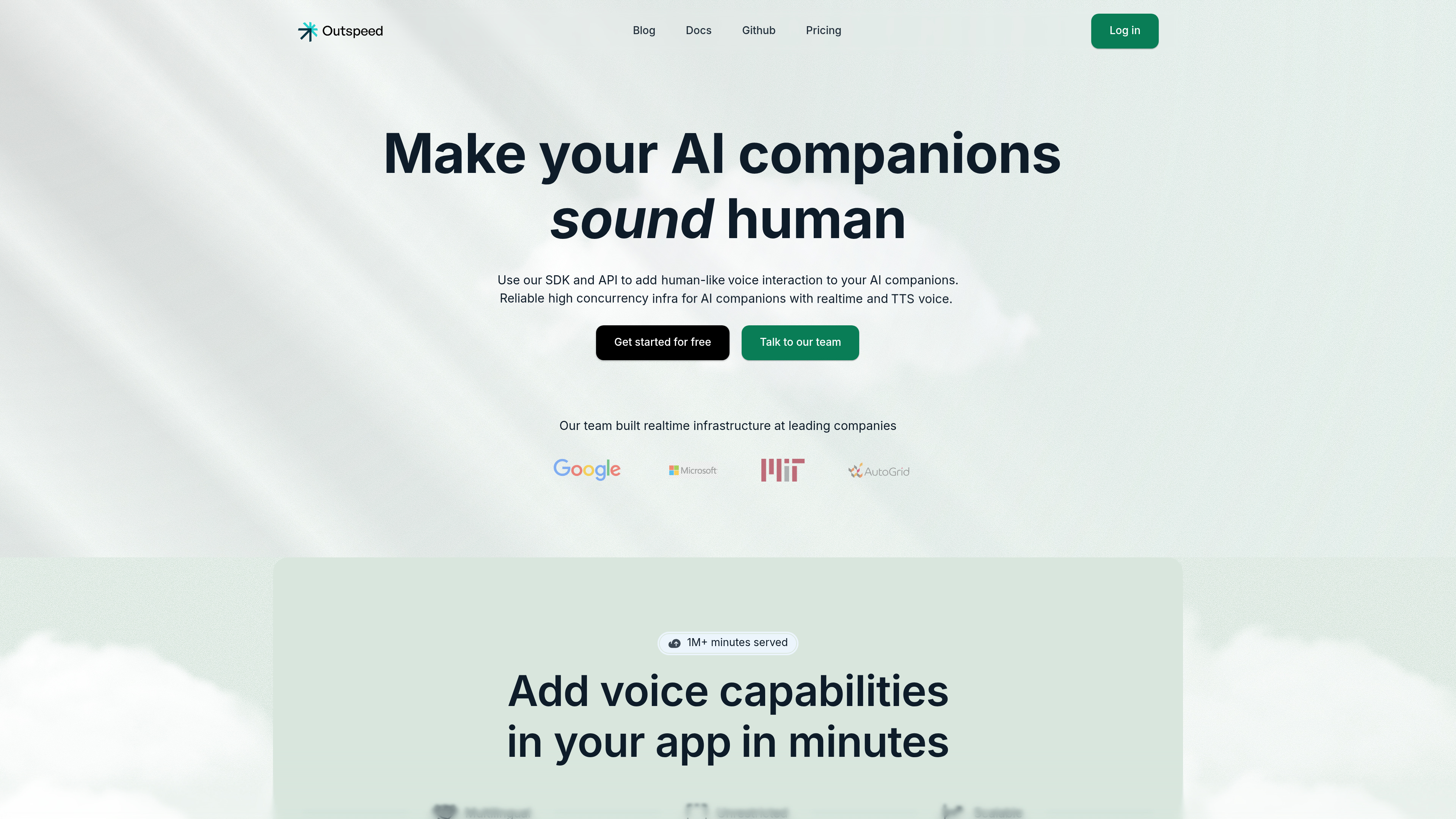
What? - Outspeed is a realtime voice and video AI infrastructure platform that lets developers add human-like voice interactions to AI companions and agents. It provides SDKs, APIs, and cloud infrastructure to build low-latency voice applications—think AI therapists, interview bots, or customer service agents—without managing the complex streaming pipeline.
Developers integrate components like Deepgram STT for speech-to-text, Groq LLM for language processing, and Cartesia TTS for text-to-speech into a single streaming endpoint, deploying production-ready voice bots in minutes rather than weeks.
Why it’s a fave? - Realtime voice AI is harder than it looks. A working system needs accurate speech recognition, fast LLM inference, clean text to speech, and reliable WebRTC networking. It also needs end-to-end latency under 500 milliseconds to keep conversations natural. Anything slower feels off. Most teams who stitch together off-the-shelf tools discover this the moment they try to move from demo to production.
Outspeed solves that by handling the heavy engineering. The platform focuses on concurrency, GPU scheduling, and streaming optimization, so developers only deal with a simple API surface. The team comes from Google and MIT and it shows in the system design. The documentation is clear, the tooling is intuitive, and support is hands-on.
The timing is strong. Voice AI adoption is rising in customer support, healthcare, financial services, and AI companion products. Companies want sub-second voice interactions but lack the ML ops and streaming expertise to run them. Outspeed gives them a path to production quality voice without hiring a specialist team.
Founded: 2024, based in San Francisco, CA
Founders: Janak Agrawal (Co-Founder) - B.Tech Computer Science from IIT Bombay, BS and MEng in Electrical Engineering and Computer Science from MIT; previous roles at Pear VC and AutoGrid (acquired by Schneider Electric) / Sahil Manocha (Co-Founder) - previously worked at Google and Microsoft on cloud infrastructure, spent time training models
Backed by (public sources): Audacious Ventures, Gaia Ventures, and Pear VC
Hiring: Founding ML Engineer
emberos
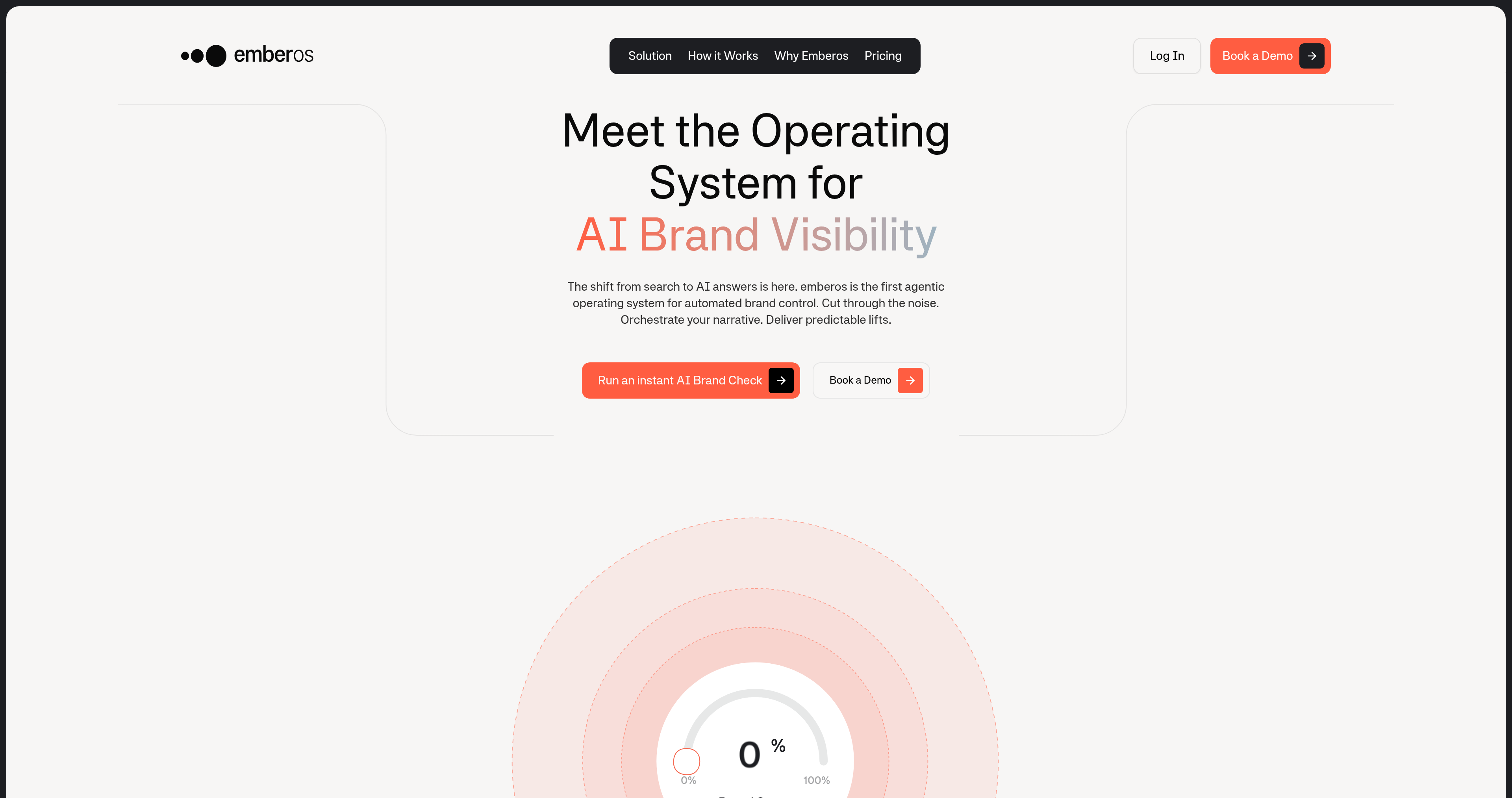
What? - emberos is an AI brand orchestration platform that measures and automates how brands appear inside systems like ChatGPT, Claude, Gemini, and Perplexity. Instead of sitting on top of dashboards, it automates detection, prediction, and execution for brand visibility in AI environments.
The platform runs on a multi agent architecture. Scout handles detection and risk monitoring across more than fifty AI models. Pilot manages strategy and predictive optimization using a Tiered AI Visibility Index that claims more than 75 percent prediction accuracy. Flow closes the loop by executing tasks directly in tools like HubSpot, Slack, and Jira.
Why it’s a fave? - Search is losing ground. Traffic to US retail sites from generative AI sources has tripled. When someone asks Claude for a project management tool or ChatGPT for dinner options in Brooklyn, that question never reaches Google. Traditional SEO and GEO tools track citations and links, but emberos focuses on model level truth. It identifies inaccuracies inside AI systems and provides a predictive ROI model on competitive visibility.
The Wicked box office prediction illustrates the thesis. Using only AI signals and high level public presale aggregates, emberos predicted the opening weekend revenue of Wicked: For Good with 92 percent accuracy. No search data.
The industry’s early indicators have followed a clear path over the past three decades: Surveys → Search → Social → AI Signals. emberos is not replacing Google Analytics. It is measuring the upstream layer that now shapes discovery. The platform is also LLM agnostic and monitors all major ecosystems including ChatGPT, Claude, Gemini, Google’s AI Overviews, Perplexity, and any other relevant model.
Founded: 2025, based in Los Angeles, CA
Founders: Justin Inman (Founder & CEO) - former Google employee who spent years helping brands adjust to the last era of brand visibility and SEO
Backed by (public sources): no disclosed funding rounds
Which early-stage startup should we feature next? Send us a reply. (Criteria: Pre-Seed, Seed, and Series A startups)
💸 Funding & Deals of the Week
ModelML, a New York City-based AI workflow automation platform for financial services, raised $75M Series A led by FT Partners, with YC, QED, 13books Capital and others.
Momentic, a San Francisco-based AI-powered testing platform for dev teams, raised $15M Series A led by Standard Capital, with Dropbox Ventures and existing backers.
Interface, a San Francisco-based industrial safety AI platform, raised $3.5M seed from defy.vc, Precursor Ventures and Rock Yard Ventures.
MadeCard, a New York City-based credit card for homeowners, raised $8M seed from Jump Capital, Village Global and others.
Archetype AI, a Palo Alto-based physical AI company, raised $35M Series A led by IAG Capital Partners and Hitachi Ventures, with Bezos Expeditions, Venrock, Amazon Industrial Innovation Fund, Samsung Ventures, Systemiq Capital and others.
Flexion, a Zurich-based intelligent software layer for humanoid robots, raised $50M Series A from DST Global Partners, NVentures, Redalpine, Prosus Ventures and Moonfire Ventures.
Physical Intelligence, a San Francisco-based physical-world AI model developer, raised $600M led by CapitalG, with Lux Capital, Thrive Capital, Jeff Bezos and others.
Wispr, a San Francisco-based voice-to-text AI writing model, raised $25M Series A extension led by Notable Capital, with Flight Fund.
Maxima, a San Mateo-based agentic AI platform for accounting automation, raised $41M (Seed + Series A) from Redpoint Ventures, Kleiner Perkins, Audacious Ventures and others.
Venn, a New York City-based OS for multifamily housing, raised $52M Series B from NOA and CIM Group, with Group 11, Oren Zeev and others.
Agentio, a New York City-based AI platform for creator-led advertising, raised $40M Series B led by Forerunner, with Benchmark, Craft Ventures and others.
GetVocal, a Paris-based conversational AI platform for customer service, raised $26M Series A led by Creandum, with Elaia and Speedinvest.
VahatiCor, a Santa Clara-based medical tech company focused on Coronary Microvascular Dysfunction, raised $23M Series B led by S3 Ventures.
Sphere, a San Francisco-based cross-border compliance platform, raised $21M Series A led by a16z, with YC and Felicis.
OpenHands, a Boston-based open platform for cloud coding agents, raised $18.8M Series A led by Madrona, with Menlo Ventures, Obvious Ventures, Fujitsu Ventures and Alumni Ventures.
Condukt, a London-based financial-services compliance platform, raised $10M from Lightspeed and MMC Ventures, with Cocoa Ventures.
Datum, a New York City-based open network cloud, raised $13.6M seed from Amplify Partners, CRV, Vervin Ventures and others.
Kaaj, a San Francisco-based AI platform automating small-business loan underwriting, raised $3.8M seed led by Kindred Ventures, with Better Tomorrow Ventures and others.
Manta Cares, a San Francisco-based platform for cancer patients and caregivers, raised $5.4M seed led by Pear VC and Sozo Ventures, with angels.
Synthio Labs, a San Francisco-based conversational AI platform for life sciences, raised $5M seed led by Elevation Capital, with 1984 Ventures, Peak XV, YC and angels.
Ember, a San Francisco-based AI-powered revenue cycle management platform, raised $4.3M seed led by Nexus Venture Partners and YC.
Profluent Bio, an Emeryville-based AI-powered protein design company, raised $106M led by Altimeter and Bezos Expeditions, with Spark Capital, Insight Partners and Air Street Capital.
Amperesand, a Singapore-based next-gen power infrastructure company for AI data centers, raised $80M Series A led by Walden Catalyst and Temasek.
Arbiter, a New York City-based platform connecting healthcare patients, providers and payers, raised $52M led by TriEdge Investment and MFO Ventures, with WindRose and others.
Modern Life, a New York City-based AI-powered life-insurance brokerage, raised $20M Series A led by Thrive Capital, with New York Life Ventures, Northwestern Mutual Future Ventures and Allegis.
onepotAI, a San Francisco-based AI chemistry platform for small-molecule synthesis, raised $13M seed from Khosla Ventures, Fifty Years and Speedinvest, with others.
Poly, a San Francisco-based AI-powered cloud file browser, raised $8M seed led by Felicis, with Bloomberg Beta, NextView, Figma Ventures, AI Grant, Wind Ventures and MVP Ventures.
BVP Forge, a San Francisco-based private equity firm, raised $1B for its second fund focused on technology and services companies.
📖 What We’re Reading
The Product-Market Fit Treadmill: Why every AI company is sprinting just to stay in place: AI companies can’t lock in PMF right now. The market shifts too fast, so PMF behaves like a subscription you have to re-earn. Stability returns only once the industry enters the value cycle.
Anthropic ships Claude Opus 4.5: Anthropic released Claude Opus 4.5, calling it its strongest model for coding and agent-driven tasks. On SWE-bench Verified, it edges out GPT-5.1 Codex Max and Gemini 3 Pro. The model is also more efficient, using 48 percent fewer tokens than Sonnet 4.5 while posting a 4.3-point performance gain. Pricing lands at $5 per million input tokens and $25 per million output, a premium tier relative to GPT-5.1 ($1.25/$10), Gemini 3 Pro ($2/$12), and Sonnet 4.5 ($3/$15). Anthropic also expanded its tools: Claude Code now supports Opus 4.5 Plan Mode, the desktop app preserves long-running chats with automatic context summarization, and Claude for Chrome and Claude for Excel are now broadly available.
Revolut’s valuation climbs to seventy-five billion dollars: After a long fundraising cycle, Revolut has secured new capital from Coatue, Greenoaks, and several other investors, putting the company at a $75 billion valuation. The neobank plans to expand into thirty additional markets as it continues its rapid global push. Revolut’s last full-year report showed 2024 revenue up 72 percent to £3.1 billion, with profit before tax rising to £1.1 billion, compared to £438 million the year prior. Those figures are now nearly a year old, but investors adding roughly $30 billion in value this round signals strong belief that 2025 performance materially outpaced earlier disclosures.
Klarna explores a corporate stablecoin: Stripe’s Tempo blockchain is steadily becoming the infrastructure layer for enterprise crypto experiments. Klarna is now preparing KlarnaUSD, a USD-denominated stablecoin planned for next year. It will run on Tempo and is designed for routine payments and cross-border settlement. If Klarna’s model proves efficient, other global payment companies will likely replicate it. That’s the strategic angle for Stripe: if multiple corporations issue synthetic dollars, they will need a shared, trusted blockchain to operate on.
AWS commits tens of billions to government-focused AI infrastructure: Amazon Web Services is preparing a massive expansion of its public-sector AI capabilities, with a plan to deploy up to $50 billion toward specialized compute for government use. Beginning in 2026, AWS expects to bring roughly 1.3 gigawatts of AI and supercomputing capacity online across AWS Top Secret, AWS Secret, and AWS GovCloud environments through a wave of new data centers. The underlying bet is clear. Federal demand for secure AI systems is expected to rise regardless of political control, and hyperscalers want to own that infrastructure layer. Azure and Google Cloud are unlikely to sit out this race.
Polymarket inches toward full U.S. approval: Polymarket secured an amended designation order from the CFTC, giving it a clearer path to operate as a fully regulated U.S. prediction market. Both Polymarket and its closest competitor, Kalshi, have raised substantial funding recently as investor interest in consumer prediction platforms accelerates.
Genesis Mission signals a shift in federal AI strategy: The U.S. government announced Genesis Mission, a program aimed at opening federal datasets and high-performance compute resources to support science-focused AI models. For researchers and AI practitioners, this represents meaningful federal commitment to applied scientific AI. It also aligns with the Department of Energy’s rapid buildout of new supercomputing capacity, which will likely underpin the initiative.
Thanks for reading.
If you enjoyed this issue, send it to a friend—it helps more than you think.
Back in your inbox Thursday,