

Hey there! 👋
You’re reading Open Scout 👀
WhatsApp had 32 employees and sold for $19 billion. That number gets cited as a story about lean teams or about the power of mobile. The more useful story is about the problem they chose.
When WhatsApp launched, international communication cost real money. Mobile carriers charged per-SMS rates that made texting between countries a luxury. Skype and Viber charged for international VOIP calls. People were ALREADY spending money on the problem. They were spending a lot of it. And they hated every option available.
WhatsApp didn’t discover a problem nobody knew about. They entered a market where billions of people were actively paying for bad solutions and offered a better one for free (then 99 cents). The problem was validated before a line of code was written. Not by surveys. Not by customer interviews. By the existence of global telecom revenue.
That’s the test most founders skip: not “does this problem exist?” but “is anyone currently spending money, time, or serious effort to solve it?” The answer to the first question is almost always yes. Everyone has problems. The answer to the second question is where 90% of startup ideas fall apart.
Before we begin... a big thank you to this week’s sponsor: Reevo

Stop Managing Activity. Start Directing Revenue.
Sales leaders spend more time chasing status updates than closing deals. Reevo changes that.
Built for the AI era, Reevo is the revenue platform that knows your business inside and out. It captures every signal, retains full context on every deal, and puts AI to work on the tasks slowing your team down — research, logging, flagging risk, and more.
The result? Your reps stop running a marathon of sales activities and start directing outcomes. They show up to every customer interaction informed, prepared, and ready to win.
One platform. Every signal. AI that works. Intelligence that compounds.
If you’re interested in sponsoring this newsletter, please reach out here.
Three tiers of problems
Problems exist on a spectrum of how validated they are before you build anything. The tier determines your risk.
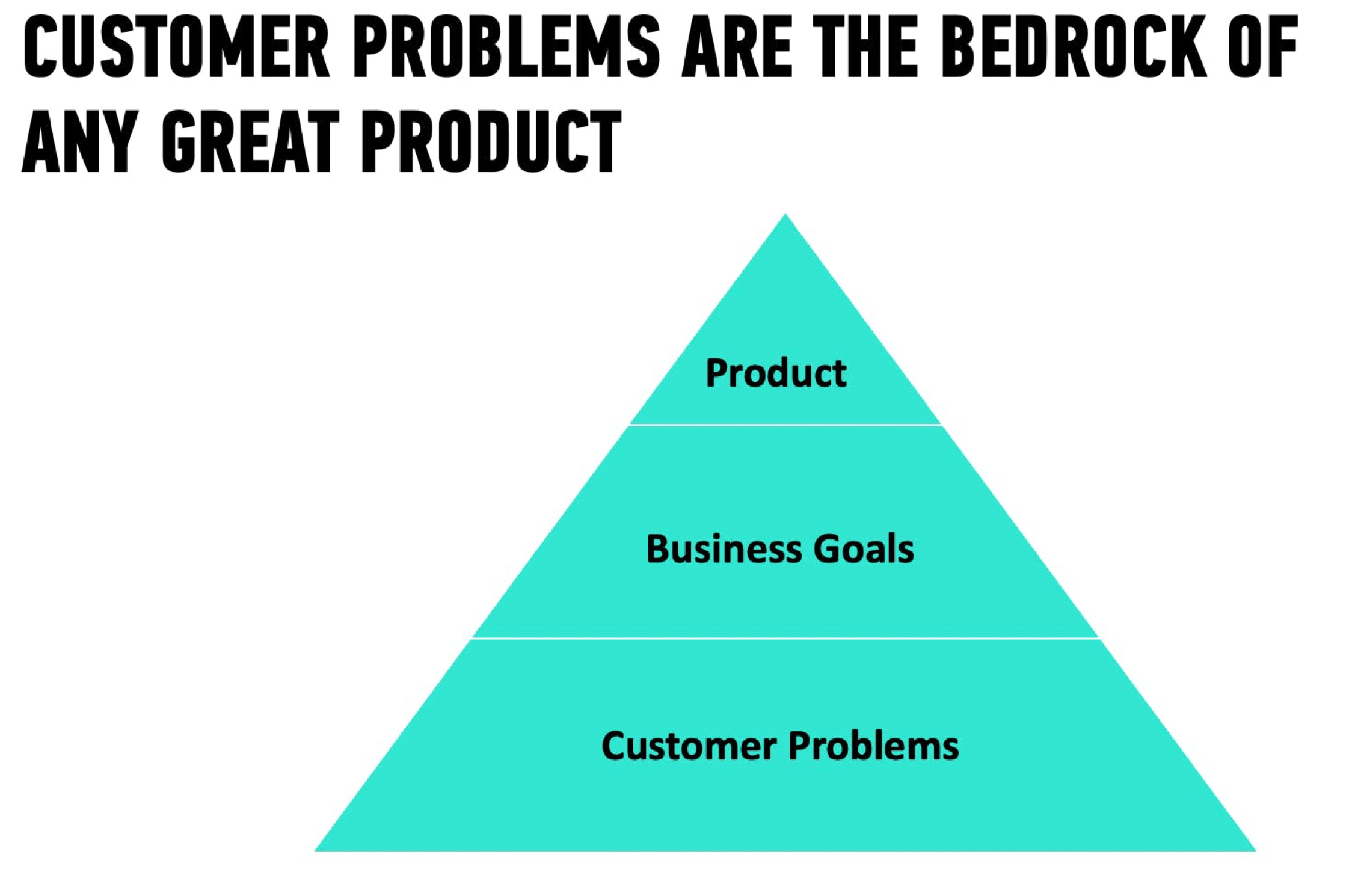
→ Tier 1: People are spending money on bad solutions. The problem is so painful that someone is already getting paid to address it, even poorly. International calls before WhatsApp. Paper maps and printed directions before GPS navigation. Manual spreadsheet reconciliation before accounting software. The market exists because revenue exists. Customers will switch if you’re meaningfully better because they’re already committed to solving the problem. They’ve allocated budget. They’ve accepted the category. You just need to be the better option.
This is the safest tier to build in because willingness to pay is proven. You don’t have to convince anyone the problem matters. You have to convince them your solution is better than what they’re already paying for.
→ Tier 2: People are spending time on workarounds but not money. The problem is real but nobody’s paying to solve it. They’re using free tools, manual processes, or cobbled-together hacks. Email threads instead of project management software. Spreadsheets instead of databases. Group texts instead of team communication tools. The problem exists, the workaround works well enough, and the question is whether you can build something valuable enough that people will switch from free-and-mediocre to paid-and-better.
This tier is riskier because willingness to pay is unproven. People say they’d pay. They might. Or they might stick with the spreadsheet because it’s free and familiar. Slack lived in this tier: email worked for team communication. It was messy, but it worked. Convincing people to pay for something better than a free workaround is a harder sell than convincing them to pay for something better than a paid bad solution.
→ Tier 3: People agree it’s a problem but aren’t doing anything about it. No money spent. No workarounds. No active effort to solve it. They’ll nod when you describe it. “Yeah, that IS annoying.” They’ll tell you they’d definitely use a solution. They might even say they’d pay. But their actual behavior shows zero urgency. They’re living with the problem and it’s not disrupting their life enough to trigger action.
This is where most startup ideas live and most startups die. Over 34% of startup failures come from building something nobody wants (CB Insights), and the vast majority of those are Tier 3 problems. Real problems that people acknowledge but won’t pay to solve. The founder mistook agreement for demand.
The workaround test
The single most reliable signal that a problem is worth solving: people are currently using an ugly, manual, expensive workaround to deal with it.
If potential customers have cobbled together a solution from spreadsheets, email chains, sticky notes, and manual processes, they’ve already told you three things:
The problem is real (they’re spending effort on it)
The problem is frequent (the workaround is part of their routine)
No existing solution is good enough (or they’d be using it)
The nature of the workaround also tells you what to build. The specific ways people hack around the problem reveal the features they actually need, the workflows they actually follow, and the language they actually use to describe what they’re doing. Their workaround is your product spec, written by the market.
HBR found that 85% of executives believe their organizations diagnose problems poorly. That stat is usually cited to argue for better problem-solving frameworks. The simpler interpretation: most organizations don’t look at what people are actually DOING. They look at what people SAY. And what people say is an unreliable guide to what they’ll pay for. What they’re actively doing, the workarounds they’ve built, the money they’re spending, the time they’re investing, is the only reliable signal.
“Would you use an app that does X?” always gets yeses. “Show me how you currently handle X” reveals whether the problem is painful enough to act on. If their current approach is “I don’t really handle it, it’s fine,” that’s a Tier 3 problem. Walk away.
The existing spend is the market
Here’s the framing that I think most founders get backwards. They think about market size as a theoretical number: TAM, SAM, SOM. They calculate it from population data and industry reports. “There are 5 million small businesses in the US, if 10% adopt at $100/month, that’s a $6 billion market.” These numbers are fiction. They’re math exercises disconnected from behavior.
The real market size is simpler and more honest: what are people currently spending to solve this problem? That’s the market. Not what they COULD spend. What they ARE spending.
If the answer is “nothing,” you’re creating a market from scratch. That’s possible but extremely hard. You have to convince people both that the problem is worth solving AND that your solution is worth paying for. Two sales instead of one.
If the answer is “$X per year on bad solutions,” your job is much clearer. Take a percentage of that existing spend by offering something better. One sale: “this is better than what you’re using.”
When WhatsApp launched, global telecom revenue from international SMS and calls was hundreds of billions. That was the market. Not theoretical. Actual revenue being collected for the exact problem WhatsApp solved. The company didn’t create demand. It redirected existing spend.
When Uber launched, the US taxi and car service market was roughly $11 billion. People were already paying for rides. Uber didn’t convince anyone that paying for rides was a good idea. They convinced people that their rides were better and cheaper than the existing option.
When Shopify launched, small merchants were paying web developers thousands of dollars to build basic online stores. The money was flowing. Shopify just redirected it into a better, cheaper channel.
In each case, the founders looked at existing spend and built something that captured a portion of it. They didn’t have to create the category. The category existed because the money was already moving.
Five traits of problems worth building for
Beyond the tier system, problems worth building for tend to share specific characteristics. The more of these a problem has, the stronger the signal:
Frequent. The problem happens often enough that a solution becomes part of the user’s routine. A problem that occurs once a year doesn’t sustain a product. A problem that occurs daily creates habit.
Intense. The pain is significant enough that people actively seek solutions. Mild inconvenience doesn’t trigger purchasing behavior. Genuine frustration does. The best signal: emotional language in customer conversations. Frustration, anger, embarrassment, anxiety. When people describe the problem with emotion, the intensity is real.
Urgent. There’s a deadline or consequence attached to not solving it. Tax filing has a deadline. Payroll has a deadline. Compliance has a deadline. Urgency creates willingness to pay that mere inconvenience doesn’t.
Growing. The problem is becoming more common, not less. Regulatory complexity is growing. Data volume is growing. Remote team coordination problems are growing. A problem attached to a secular trend means the market expands without you doing anything.
Currently funded. Someone is already paying for a solution. Maybe a bad one. Maybe an expensive one. But money is moving in the direction of this problem. This is the strongest of the five because it removes the biggest uncertainty: whether people will actually open their wallets.
A problem that hits all five is rare. Three out of five is a strong foundation. Frequent + intense + currently funded is probably the minimum for a venture-scale opportunity. If the problem is infrequent, low-intensity, and nobody’s spending money on it, you’re in Tier 3 territory no matter how many people agree it’s real.
What customer interviews actually reveal
Most startup advice says “talk to customers.” Good advice. But what you’re listening for matters more than how many conversations you have.
The valuable signals aren’t answers to direct questions. They’re behavioral admissions:
“I spend about 3 hours a week on this.” (Time spend = validated frequency and intensity)
“We pay $X per month for [existing solution] and it’s terrible.” (Money spend = validated willingness to pay)
“I built a spreadsheet to track this because nothing else works.” (Workaround = validated pain + feature spec)
“We almost lost a client because of this.” (Consequences = validated urgency)
“I’ve tried three different tools and none of them work.” (Shopping behavior = validated demand)
The useless signals:
“Yeah, that’s definitely a problem.” (Agreement ≠ demand)
“I’d probably use that.” (Hypothetical intent ≠ real behavior)
“That sounds cool.” (Interest ≠ willingness to pay)
“Send me more info.” (Politeness ≠ urgency)
The gap between these two sets of responses is the gap between Tier 1 and Tier 3. If your interviews are generating the second set, the problem isn’t your interview technique. It’s your problem selection. You’ve found something real but not painful enough to trigger action.
99% of the world’s problems aren’t worth solving as a business. Not because they’re not real. Because they’re not intense, frequent, or urgent enough for anyone to pay. The founder’s job isn’t to find a problem. It’s to find one of the 1% where the pain is so sharp that people are ALREADY paying to make it stop, badly, and you can do it better.
Thanks for reading.
If you enjoyed this issue, send it to a friend—it helps more than you think.
Back in your inbox Thursday,